
Healthcare Interoperability: FHIR, HL7, LOINC & SNOMED CT Explained
Healthcare Interoperability: The Complete Guide to FHIR, HL7, LOINC, and SNOMED CT
Every day, millions of lab orders, clinical results, and patient records need to flow seamlessly between Electronic Health Records (EHRs), Laboratory Information Systems (LIS), and clinical decision support tools. Yet healthcare data exchange remains one of the most critical challenges in modern medicine.
In this comprehensive guide, you’ll discover:
- How the four pillars of healthcare interoperability work together
- Practical examples of HL7 messages and FHIR resources
- A complete lab order workflow from order to results
- Best practices for implementing healthcare integrations
Why Healthcare Interoperability Matters
Imagine a patient visiting three different healthcare providers in a month. Without interoperability, each provider might order duplicate tests, miss critical allergies, or lack access to recent lab results. This isn’t just inefficient—it’s potentially dangerous.
The foundation of healthcare data exchange rests on four interconnected standards: HL7, FHIR, LOINC, and SNOMED CT. Understanding how these standards work together is essential for anyone involved in healthcare IT, clinical informatics, or health data integration.
The Four Pillars Overview
Legacy Systems"] fhir["FHIR R4
Modern APIs"] end subgraph Terminology["Terminology Standards"] loinc["LOINC
Test Codes"] snomed["SNOMED CT
Clinical Terms"] end Messaging --> Terminology hl7 --> loinc fhir --> loinc fhir --> snomed style hl7 fill:#e3f2fd,stroke:#1976d2 style fhir fill:#e3f2fd,stroke:#1976d2 style loinc fill:#f3e5f5,stroke:#7b1fa2 style snomed fill:#f3e5f5,stroke:#7b1fa2
ASCII Version (click to expand)
``` ┌─────────────────────────────────────────────────────────────────┐ │ HEALTHCARE DATA EXCHANGE │ ├─────────────────────────────────────────────────────────────────┤ │ ┌─────────────────────────────────────────────────────────┐ │ │ │ MESSAGING STANDARDS │ │ │ │ ┌─────────────────────┐ ┌─────────────────────────┐ │ │ │ │ │ HL7 v2.x │ │ FHIR R4 │ │ │ │ │ │ (Legacy Systems) │ │ (Modern APIs) │ │ │ │ │ └─────────────────────┘ └─────────────────────────┘ │ │ │ └─────────────────────────────────────────────────────────┘ │ │ │ │ │ ▼ │ │ ┌─────────────────────────────────────────────────────────┐ │ │ │ TERMINOLOGY STANDARDS │ │ │ │ ┌─────────────────────┐ ┌─────────────────────────┐ │ │ │ │ │ LOINC │ │ SNOMED CT │ │ │ │ │ │ (Test Codes) │ │ (Clinical Terms) │ │ │ │ │ └─────────────────────┘ └─────────────────────────┘ │ │ │ └─────────────────────────────────────────────────────────┘ │ └─────────────────────────────────────────────────────────────────┘ ```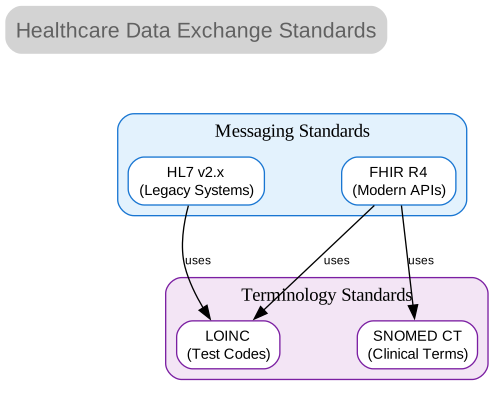
HL7 (Health Level Seven): The Legacy Standard
HL7 has been the backbone of healthcare messaging since the 1980s. The most widely used version, HL7 v2.x, defines message formats for clinical events like patient admissions, lab orders, and results reporting.
Key Message Types
| Message | Name | Purpose |
|---|---|---|
| ADT | Admit/Discharge/Transfer | Patient movement tracking |
| ORM | Order Message | Lab and procedure orders |
| ORU | Observation Result | Lab results and clinical observations |
| SIU | Scheduling Information | Appointment management |
Example HL7 v2 Message
MSH|^~\&|EHR|HOSPITAL|LIS|LAB|20241201120000||ORM^O01|12345|P|2.5
PID|1||MRN123456||DOE^JOHN||19800115|M
ORC|NW|ORD001||||||20241201
OBR|1|ORD001||85025^CBC^LN|||20241201120000
Pro Tip: The pipe character (|) is the field separator, and the caret (^) separates components within a field.
FHIR (Fast Healthcare Interoperability Resources): The Modern Approach
FHIR represents the modern evolution of healthcare data exchange. Built on RESTful APIs and JSON/XML formats, FHIR makes healthcare data more accessible to developers and integrates easily with web and mobile applications.
Core FHIR Resources for Lab Integration
| Resource | Purpose | Replaces (HL7) |
|---|---|---|
| ServiceRequest | Lab and procedure orders | ORM message |
| Observation | Lab results and vital signs | ORU message |
| DiagnosticReport | Comprehensive result reports | ORU with panels |
| Specimen | Sample tracking information | SPM segment |
Example FHIR ServiceRequest
{
  "resourceType": "ServiceRequest",
  "status": "active",
  "intent": "order",
  "code": {
    "coding": [{
      "system": "http://loinc.org",
      "code": "85025-9",
      "display": "Complete blood count"
    }]
  },
  "subject": {
    "reference": "Patient/12345"
  },
  "authoredOn": "2024-12-01T12:00:00Z"
}
LOINC: Universal Test Codes
LOINC (Logical Observation Identifiers Names and Codes) provides universal codes for laboratory tests and clinical observations. Without LOINC, a “CBC” at one hospital might be coded completely differently than at another, making data comparison impossible.
LOINC Code Structure
Each LOINC code describes six axes:
- Component - What is measured (e.g., Hemoglobin)
- Property - Characteristic (e.g., Mass concentration)
- Time - Point in time vs. over time
- System - Specimen type (e.g., Blood)
- Scale - Quantitative, qualitative, ordinal
- Method - How measured (if relevant)
Common LOINC Codes
| Code | Description |
|---|---|
85025-9 |
Complete Blood Count (CBC) |
2339-0 |
Glucose [Mass/volume] in Blood |
718-7 |
Hemoglobin [Mass/volume] in Blood |
4544-3 |
Hematocrit [Volume Fraction] of Blood |
SNOMED CT: Clinical Terminology
While LOINC codes what was tested, SNOMED CT codes what was found. It’s a comprehensive clinical terminology covering diagnoses, procedures, findings, and anatomical structures.
SNOMED CT Hierarchy
- Clinical findings (diagnoses, symptoms)
- Procedures (surgeries, interventions)
- Observable entities (what can be measured)
- Body structures (anatomy)
- Substances (medications, chemicals)
Example SNOMED Codes
| Code | Description |
|---|---|
271737000 |
Anemia |
166705000 |
Hemoglobin low |
165746003 |
Packed cell volume low |
How They Work Together: Lab Order Workflow
The true power of these standards emerges when they work together in clinical workflows.
LOINC: 85025-9 (CBC) IE->>LIS: Forward Order LIS->>LIS: Process Sample LIS->>IE: ORU^R01 / Observation
Results + SNOMED CT IE->>EHR: Return Results EHR->>CDS: Evaluate Results CDS-->>EHR: Alerts / Recommendations
ASCII Workflow (click to expand)
``` START: Physician Orders Lab Test │ ▼ ┌─────────────────────────────────────────────────────────────┐ │ EHR SYSTEM │ │ Order Created: LOINC 85025-9 (CBC) │ └─────────────────────────────────────────────────────────────┘ │ │ ORM^O01 (HL7) or ServiceRequest (FHIR) ▼ ┌─────────────────────────────────────────────────────────────┐ │ INTEGRATION ENGINE │ │ Transform & Route Messages │ └─────────────────────────────────────────────────────────────┘ │ ▼ ┌─────────────────────────────────────────────────────────────┐ │ LIS SYSTEM │ │ Receive → Process Sample → Generate Results │ └─────────────────────────────────────────────────────────────┘ │ │ ORU^R01 (HL7) or Observation (FHIR) ▼ ┌─────────────────────────────────────────────────────────────┐ │ EHR SYSTEM │ │ Display Results → CDS Engine → Alerts │ └─────────────────────────────────────────────────────────────┘ │ ▼ END: Physician Reviews Results ```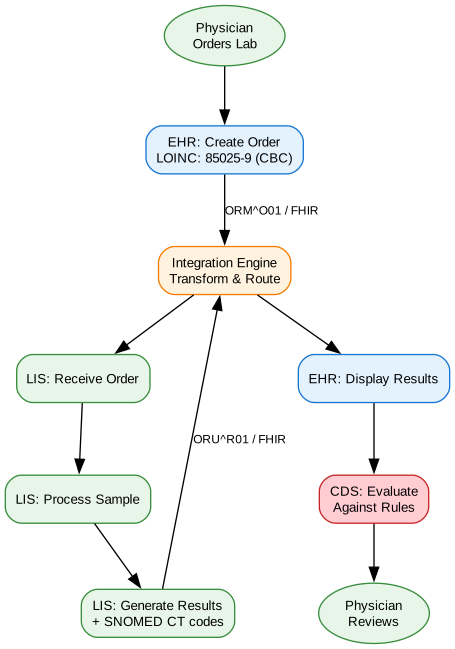
The Integration Architecture
Modern healthcare integration typically involves an integration engine that bridges legacy HL7 v2 systems with modern FHIR APIs.
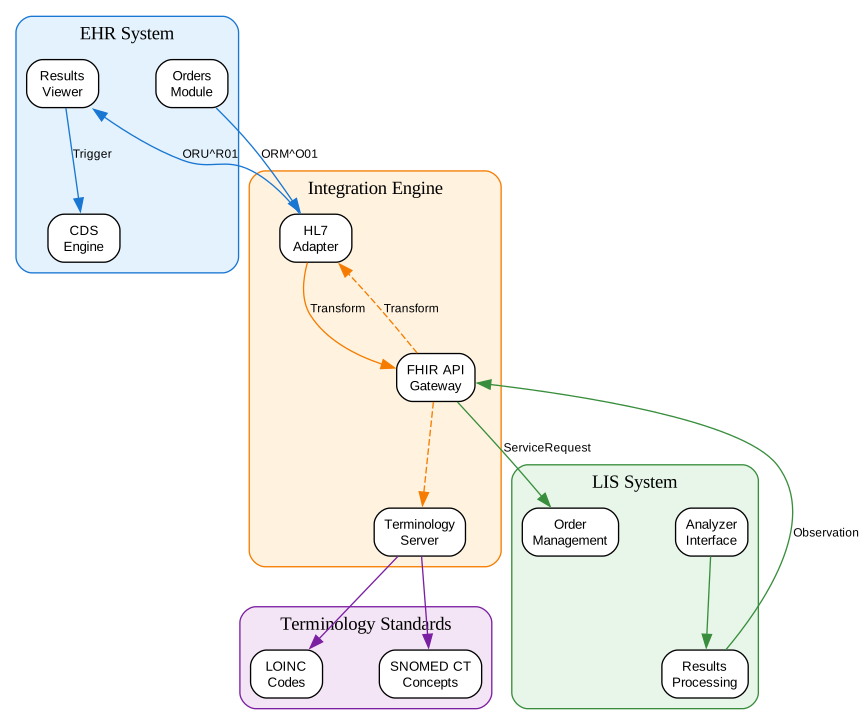
Key Components
- HL7 Adapter: Parses and generates HL7 v2 messages
- FHIR API Gateway: Handles RESTful FHIR requests
- Terminology Server: Validates and maps LOINC/SNOMED codes
- Message Queue: Ensures reliable delivery
HL7 to FHIR Mapping
Many organizations need to support both HL7 v2 (for legacy systems) and FHIR (for modern applications). Understanding the mapping between them is crucial.
Order Message"] oru["ORU^R01
Result Message"] adt["ADT^A01
Admit Message"] pid["PID Segment
Patient Info"] end subgraph FHIR["FHIR Resources"] sr["ServiceRequest"] obs["Observation"] enc["Encounter"] pat["Patient"] end orm -->|maps to| sr oru -->|maps to| obs adt -->|maps to| enc pid -->|maps to| pat style HL7 fill:#e3f2fd,stroke:#1976d2 style FHIR fill:#e8f5e9,stroke:#388e3c
ASCII Mapping Table (click to expand)
``` HL7 v2.x MESSAGE FHIR RESOURCE ═══════════════════ ═══════════════ ┌─────────────────┐ ┌─────────────────┐ │ ORM^O01 │ ──────────────────► │ ServiceRequest │ │ (Order Msg) │ │ │ └─────────────────┘ └─────────────────┘ ┌─────────────────┐ ┌─────────────────┐ │ ORU^R01 │ ──────────────────► │ Observation │ │ (Result Msg) │ │ │ └─────────────────┘ └─────────────────┘ ┌─────────────────┐ ┌─────────────────┐ │ ADT^A01 │ ──────────────────► │ Encounter │ │ (Admit) │ │ │ └─────────────────┘ └─────────────────┘ SEGMENT MAPPING: ├── MSH ──────────► MessageHeader ├── PID ──────────► Patient ├── PV1 ──────────► Encounter ├── ORC ──────────► ServiceRequest ├── OBR ──────────► DiagnosticReport └── OBX ──────────► Observation ```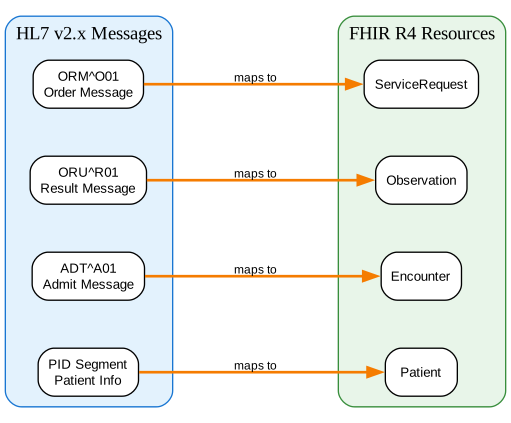
Common Integration Challenges
Challenge 1: Code Mapping
Different systems may use different coding systems. A terminology server helps map between local codes and standard LOINC/SNOMED codes.
Challenge 2: Version Compatibility
HL7 v2.3 messages may need transformation to work with v2.5 systems. FHIR R4 and R5 have different resource structures.
Challenge 3: Vocabulary Alignment
Ensuring consistent use of value sets and code systems across all integrated systems requires governance and validation.
Best Practices for Implementation
- Start with FHIR for new implementations - It’s more developer-friendly and future-proof
- Maintain HL7 v2 adapters - Many legacy systems still require v2 messaging
- Implement a terminology service - Central management of LOINC and SNOMED codes
- Use standard profiles - US Core, IHE profiles define expected data elements
- Plan for both batch and real-time - Different use cases require different patterns
Common Questions
Q: Can I use FHIR without supporting HL7 v2? A: For greenfield implementations, yes. However, most healthcare environments have legacy systems that require HL7 v2 support for the foreseeable future.
Q: How do I get started with LOINC codes? A: Register at loinc.org for free access to the LOINC database. Many EHR and LIS vendors include LOINC mappings.
Q: Is SNOMED CT required for compliance? A: Requirements vary by region. In the US, SNOMED CT is required for certain Meaningful Use/Promoting Interoperability measures.
Key Takeaways
- HL7 v2 remains essential for legacy system integration but is being supplemented by FHIR
- FHIR provides modern REST APIs that integrate easily with contemporary applications
- LOINC standardizes what tests are ordered and performed
- SNOMED CT standardizes clinical findings and diagnoses
- Together, these standards enable true semantic interoperability in healthcare
What’s Next?
Healthcare interoperability is complex, but understanding these four standards provides a solid foundation. As the industry continues its digital transformation, mastery of FHIR, HL7, LOINC, and SNOMED CT becomes increasingly valuable.
Ready to dive deeper? Consider exploring:
Further Reading
Official Resources:
Disclaimer: This content is intended for educational purposes. Healthcare implementations should always involve qualified informatics professionals and follow organizational compliance requirements.